CONCRETE SERVICES
Concrete driveways
in Charlotte, NC.
A better welcome home.
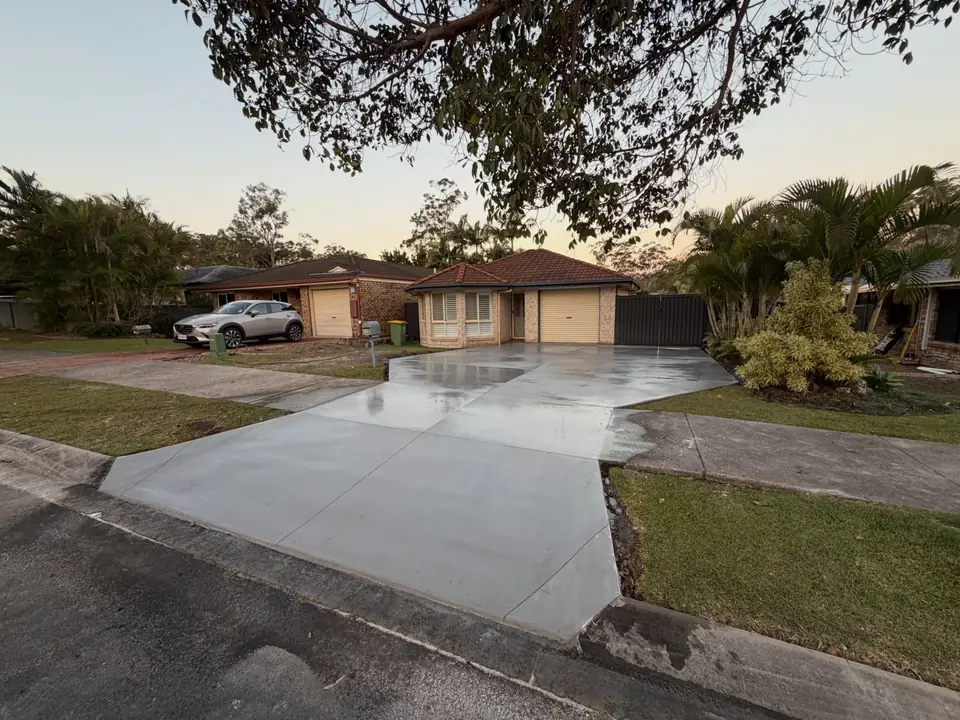
Built around your property.
Make room for everyday life with a concrete driveway that connects your home to the street. From replacing worn pavement to adding parking space, start with a plan for access, drainage and a finish that complements your property.
2026 CHARLOTTE PRICE GUIDE
Concrete driveways pricing
New broom-finish driveway
per sq. ft.Existing concrete removal
per sq. ft.Extensions, curves or difficult access
site estimatePlanning guide for Charlotte-area projects. These published-market ranges are not a bid from Piedmont Concrete Co. Minimum project charges, thickness, reinforcement, demolition, access, grading, drainage, permits and finish choices can change the total. Request a site-specific written estimate before making a project decision.
Get my exact estimateWhat goes into the work.
A driveway is more than the surface you see. Access for equipment, the condition of the base, slope, reinforcement and joint placement all influence the scope. We discuss these details before the pour so your estimate reflects the actual work.
- Removal and replacement of existing concrete
- Driveway extensions and additional parking
- Broom-finished surfaces and defined edges
- Transitions to garages, sidewalks and the street
How a concrete driveway is built
Most residential driveways for passenger cars are poured about 4 inches thick over a compacted crushed-stone base. Where trucks, trailers or RVs park, 5 to 6 inches and added reinforcement are common. A typical sequence looks like this:
- Removal and excavation. Old concrete or asphalt is broken out and hauled away, and the subgrade is dug to depth.
- Grading and base. The ground is shaped so water runs away from the garage and foundation, then a stone base is placed and compacted.
- Forms and reinforcement. Forms set the edges and finished height; wire mesh, rebar or fiber is chosen for the expected loads.
- Pour and finish. Concrete is placed, leveled and given a broom finish for traction.
- Joints and curing. Control joints are cut or tooled to guide cracking, and the surface is kept from drying out too quickly.
Charlotte soil and weather considerations
Much of the Charlotte region sits on Piedmont red clay. Clay holds water, swells when it is wet and shrinks during dry spells, so a firm, well-drained base matters more here than surface thickness alone. Winters are mild, but freezing nights do occur, which is why timing, curing protection and sealing are part of the plan for cold-weather pours.
Permits, street connections and HOA rules
Replacing a driveway in the same footprint often needs no permit, but work at the street is different. A new or widened curb cut usually involves the city or town that owns the street, and state-maintained roads fall under NCDOT. Many neighborhoods also have HOA rules on driveway width, color or finish. Check these early so the layout does not need to change after an estimate.
When to repair and when to replace
A few hairline cracks are normal. Replacement becomes the more practical option when slabs have sunk or lifted, cracks keep widening, water collects against the garage, or large areas are scaling and breaking up. Our concrete repair page explains how the existing surface is assessed.
Planning your project.
Send approximate dimensions and photos of the existing driveway. Tell us about standing water, cracks, steep slopes or vehicles that need access during construction.
Concrete driveways: common questions
How long before I can drive on a new concrete driveway?
Foot traffic is usually fine after a day or two. Passenger cars typically wait about 7 days, and heavier vehicles longer. Concrete keeps gaining strength for about 28 days, so follow the curing instructions for your specific pour.
How thick should a concrete driveway be?
About 4 inches is common for passenger vehicles. Areas used by trucks, trailers or RVs are often 5 to 6 inches with added reinforcement.
Should I seal my concrete driveway?
A penetrating sealer can help resist water and staining. It is usually applied after the concrete has cured, then renewed every few years depending on exposure.
YOUR NEXT PROJECT STARTS HERE
Let’s make room
for something better.
Tell us what you have in mind. We’ll help with the next step.